
Radiator Repair in Winston-Salem, NC
Coolant leak, damaged radiator, or rising engine temperature? Get the cooling system inspected before deciding what needs repair. Carolina Auto Service provides radiator repair, replacement, and coolant service at our shop near Hanes Mall.
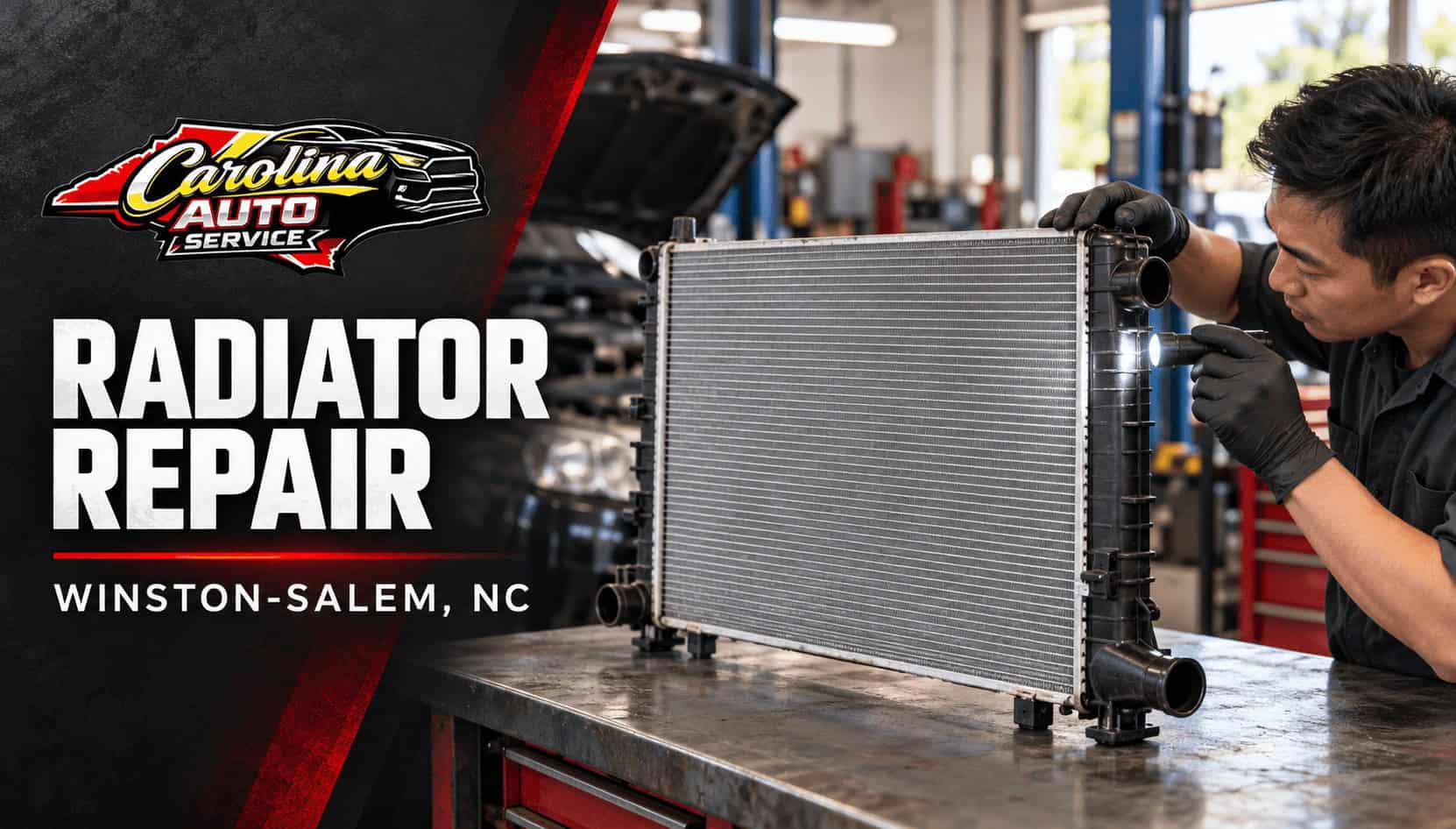
Where can I get radiator repair in Winston-Salem?
Carolina Auto Service provides in-shop radiator repair and cooling-system service at 160 Hanes Mall Cir in Winston-Salem, NC. Services include leak inspection, hose replacement, coolant service, and radiator replacement when needed. The appropriate repair depends on the confirmed fault and vehicle design. Call 336-765-8599 to discuss your symptoms and arrange an appointment.
What should you do if your car is overheating?
Pull over as soon as it is safe, switch off the engine, and seek assistance. Do not keep driving to reach the repair shop. A temperature warning, steam, or a gauge moving into the hot zone can indicate a cooling-system problem that may damage the engine.
- Do not open a radiator cap or pressurized coolant reservoir while the system is hot.
- Keep clear of escaping steam and hot fluid.
- Follow your vehicle’s owner’s manual for the warning shown.
- Ask whether towing is appropriate before attempting to drive again.
Hot, pressurized coolant can cause serious burns. A coolant top-off does not establish that the vehicle is safe to drive or that the underlying fault has been corrected.
What radiator services does Carolina Auto Service provide?
Carolina Auto Service provides radiator and cooling-system services that include leak detection, hose replacement, coolant service, and radiator replacement. The recommended work depends on the source of the concern rather than the symptom alone.
A radiator is the heat exchanger that transfers heat from engine coolant to passing air. It works with the water pump, thermostat, hoses, cooling fans, and other components. A problem elsewhere in that system can look like radiator trouble, so identifying the cause matters.
Coolant leak inspection
Coolant can escape from radiator seams, hose connections, reservoirs, the water pump, or other parts of the system. Inspection helps identify where the fluid is coming from. A puddle near the front of the vehicle does not prove the radiator itself has failed.
Radiator repair or replacement
The radiator’s construction, condition, and damage determine whether a suitable repair is possible. Cracked plastic tanks, extensive corrosion, or core damage may call for replacement. The team can explain the findings and the appropriate option for your vehicle.
Radiator hose replacement
Damaged hoses and connections can cause coolant loss even when the radiator is sound. Worn, cracked, swollen, or leaking hoses need assessment. Repairing the identified hose or connection may be the correct response rather than replacing an otherwise functioning radiator.
Coolant service
Cooling-system service replaces coolant when required by the maintenance schedule or repair procedure. The coolant must meet the vehicle’s specifications. Cleaning or flushing may be appropriate in some circumstances, but it does not repair a cracked tank or eliminate every restriction.
Tell us what happens, not just which part you suspect. Share when the temperature rises, how often coolant needs topping up, and whether you notice leaks, steam, smells, or changing heater performance. These details help establish the right starting point.
What are the signs of radiator or cooling-system trouble?
Coolant loss, overheating, visible residue, or changing heater performance can indicate cooling-system trouble. These signs do not identify a failed radiator on their own. Inspection may reveal a hose, pump, thermostat, fan, cap, or another cause.
| What you notice | Possible explanations | Useful information to share |
|---|---|---|
| Coolant level repeatedly drops | An external leak, internal loss, or another system fault. | How often fluid is added, the amount, and any visible residue or puddles. |
| Temperature rises at idle | A fan or airflow concern, coolant loss, or another cooling fault. | Whether the temperature changes in traffic versus at road speed. |
| Temperature rises under load | Insufficient cooling capacity, circulation trouble, or another engine-related concern. | Whether it happens during hills, towing, or sustained driving. |
| Residue near radiator seams | A possible leak at a tank, seam, neck, or nearby connection. | Where the residue appears and whether coolant loss is ongoing. |
| Sweet smell or steam | Coolant may be leaking or contacting a hot surface. | When it occurs; stop safely if accompanied by overheating or visible steam. |
| Heater output changes | Low coolant, trapped air, restricted flow, or a separate heater-control issue. | Whether the heater changes at idle, during acceleration, or after recent service. |
If inspection points to a circulation problem, our water pump replacement service may be relevant. Suspected engine damage needs a separate assessment through our engine repair service.
Can your radiator be repaired, or does it need replacement?
The answer depends on what failed, how the radiator is built, and whether a durable repair is appropriate. A leaking hose connection is different from a cracked radiator tank or a damaged core. Replacement should follow confirmed findings, not an assumption that overheating always means radiator failure.
When another repair may be appropriate
If the leak is from a hose, clamp, connection, or another component, correcting that fault may resolve the coolant loss. The radiator still needs assessment, but it does not automatically need replacement because another part leaked nearby.
A serviceable radiator with external debris may need appropriate cleaning. Maintenance can address certain conditions; it cannot reverse structural damage.
When radiator replacement may be needed
Replacement may be appropriate for cracked plastic tanks, damaged hose necks, substantial core damage, persistent seam leaks, or deterioration that makes a lasting repair impractical. The correct replacement must fit the vehicle’s application.
Ask what failed, why replacement is recommended, and whether related hoses or connections also need attention.
A flush and a repair solve different problems. Coolant service addresses maintenance or certain contamination concerns. It does not seal a crack, repair a damaged hose, or guarantee that an overheating problem will disappear.
Radiator repair: know the next step
Recognize coolant loss, respond safely to overheating, and identify the cause before choosing parts. The right next step depends on the inspection findings and your vehicle’s design.

How is a radiator concern evaluated?
Evaluation starts with the symptoms and an inspection of the cooling system. Additional testing depends on what is found. For example, a pressure test can help locate certain leaks, while overheating without visible loss may call for other checks.
Not every fault appears during one static inspection. Some leaks develop only under particular operating conditions, and an overheating problem may involve more than one component. Describe the conditions accurately and share any previous repairs or repeated top-offs.
-
Review the concern
Explain the temperature behavior, coolant loss, warning messages, and recent service history. Mention whether the problem occurs at idle, at road speed, or under load.
-
Inspect and test as needed
Inspection and suitable tests help distinguish radiator damage from hose, pump, thermostat, fan, or other concerns. The scope depends on the symptoms and findings.
-
Discuss the repair plan
Review the identified fault, recommended work, parts, coolant requirements, and expected timing. Ask about further testing if the cause has not yet been confirmed.
Which coolant should your vehicle use?
Use coolant that meets your vehicle manufacturer’s requirements. Color alone is not a reliable way to establish compatibility. Different formulations can have different corrosion-protection requirements even when they look similar.
The correct concentration and refill procedure also matter. Some vehicles require a specific process to remove trapped air. Follow the application’s service instructions rather than assuming that filling the reservoir completes every repair.
Follow the manufacturer’s maintenance schedule for coolant replacement. Repeatedly adding coolant is not a substitute for investigating unexplained loss.
What to clarify before coolant service
- The coolant specification required for your engine.
- Whether the coolant is due for scheduled replacement.
- Whether contamination or a repair changes the service needed.
- Any previous coolant mixing or unknown products added.
- What level-checking instructions apply after the visit.
Tell the team if a stop-leak product was used. Additives do not replace a confirmed diagnosis and may complicate later cooling-system service.
How much does radiator repair cost?
Radiator repair cost depends on the confirmed fault, vehicle design, parts, access, coolant requirements, and any related damage. A hose repair and a complete radiator replacement involve different work.
Contact Carolina Auto Service with your year, make, model, and symptoms. Ask what the estimate includes, such as diagnosis, parts, labor, coolant, and any additional testing. A useful estimate follows an understanding of the required work rather than one price for every cooling-system concern.
How long does radiator service take?
Timing depends on the diagnostic work, parts availability, radiator access, and scope of the repair. The vehicle may need time to cool before certain inspections or service procedures can be performed safely.
Ask about expected timing when booking. Mention recent overheating or repeated coolant loss so the team can advise on the next step. Do not drive an overheating vehicle simply to meet an appointment time; discuss towing when needed.
Radiator repair near Hanes Mall
Carolina Auto Service performs radiator and cooling-system work at its physical shop at 160 Hanes Mall Cir in Winston-Salem. Bring your vehicle to the shop for its scheduled visit, or discuss transport first if it is overheating.
Knowing how your vehicle behaves helps the team plan the inspection. Bring service records if available, including previous radiator, coolant, thermostat, or water pump work. Mention whether symptoms began before or after that service.
Learn more about Carolina Auto Service or visit our contact page for help planning your appointment.
Helpful details when you call
- Vehicle year, make, model, engine, and mileage.
- Whether the engine is currently overheating.
- Any temperature warning or steam observed.
- How often coolant needs topping up.
- Where leaks or residue appear.
- Recent repairs, coolant products, or additives used.
You do not need to identify the failed part yourself. Describe the symptoms and ask what inspection is appropriate.
Radiator repair FAQs
These answers provide general service guidance. Your vehicle’s owner’s manual takes priority for model-specific coolant requirements and warning responses.
What radiator services does Carolina Auto Service offer?
Carolina Auto Service offers radiator and cooling-system services including leak inspection, hose replacement, coolant service, and radiator replacement when needed. The appropriate work depends on the confirmed fault and vehicle design. Describe coolant loss, temperature changes, or previous repairs when booking so the team can discuss the right starting point for your inspection.
Does overheating always mean the radiator needs replacement?
No. Overheating can involve low coolant, a leak, thermostat trouble, a water pump concern, insufficient airflow, a cooling fan fault, or another engine-related problem. Radiator replacement should follow confirmed findings. If the temperature warning appears or the engine overheats, stop safely and switch it off rather than continuing to drive while guessing which part failed.
Can I drive with a leaking radiator?
A leaking radiator can lose coolant and lead to overheating, so do not assume the vehicle is safe to drive. Contact the shop for guidance based on the leak and symptoms. If there is overheating, a temperature warning, substantial fluid loss, or steam, stop safely, shut off the engine, and seek assistance. Towing may be appropriate.
Can a radiator be repaired instead of replaced?
Sometimes, but it depends on the radiator’s construction, the location of the damage, and whether a durable repair is suitable. A hose connection leak differs from a cracked plastic tank or damaged core. Inspection helps establish whether the radiator itself needs work. Ask the team to explain why repair or replacement is recommended for your application.
Will a coolant flush fix a radiator leak?
A coolant flush does not repair a cracked radiator tank, damaged hose, or leaking connection. Coolant service addresses maintenance or certain contamination concerns, while a leak requires identification and an appropriate repair. If the coolant level repeatedly drops, arrange an inspection rather than relying on flushing or top-offs to correct an unknown fault.
Why does my car overheat in traffic but not at road speed?
That pattern can suggest an airflow or cooling fan concern, but it does not establish the cause by itself. Coolant loss, circulation problems, or other faults can also affect temperature behavior. Tell the team when it happens and whether warning messages appear. Stop safely and turn off the engine if it overheats rather than using continued driving as a test.
Can I choose replacement coolant by its color?
Coolant color alone does not reliably confirm compatibility. Choose a product that meets the vehicle manufacturer’s requirements, with the specified concentration and service procedure. Tell the shop if an unknown coolant or additive was added previously. Mixing products without confirming suitability can complicate maintenance, so follow your owner’s manual rather than matching color alone.
Is it safe to open the coolant cap after overheating?
Never open a radiator cap or pressurized coolant reservoir while the cooling system is hot. Hot coolant and steam can escape and cause serious burns. Stop safely, turn off the engine, and follow the owner’s manual. Do not assume that waiting a few minutes makes the cap safe to remove; seek assistance if unsure.
How can I get a radiator repair estimate?
Call Carolina Auto Service at 336-765-8599 with your vehicle details and a description of the problem. Pricing depends on the confirmed fault, parts, labor, coolant requirements, and any related damage. Ask how inspection or diagnostic charges are handled and what the repair estimate includes. A radiator replacement estimate differs from a hose repair or scheduled coolant service.
Does Carolina Auto Service provide radiator repair at my home?
Radiator repair is performed at Carolina Auto Service’s physical shop at 160 Hanes Mall Cir in Winston-Salem, NC. This is an in-shop service. Request an appointment online or call to discuss your vehicle’s symptoms. If the engine is overheating or losing coolant, ask about the appropriate next step before attempting to drive to the shop.
Cooling-system concerns can involve more than the radiator
For additional background, read our radiator symptoms and cost guide or our car fluid leak identification guide.
Schedule radiator repair in Winston-Salem
Contact Carolina Auto Service to discuss coolant loss, radiator damage, or cooling-system concerns. Share your symptoms so the team can help you plan the appropriate visit.
160 Hanes Mall Cir, Winston-Salem, NC
Monday–Friday: 7:30 am–5:30 pm · Saturday–Sunday: Closed
If the engine is currently overheating, stop safely and switch it off. Seek guidance before driving to the appointment.
Vehicle-specific guidance
This page provides general service information. Symptoms alone cannot confirm a failed radiator. Coolant specifications, test procedures, repair options, and maintenance intervals vary by vehicle. Follow the owner’s manual and seek an inspection for unexplained coolant loss or temperature concerns.
Cooling-system references
- Ford: Checking and Adding Engine Coolant — manufacturer coolant and hot-cap safety guidance; consult your own vehicle’s manual.
- Gates: Understanding Coolant Technology — coolant formulations and manufacturer requirements.
- Your vehicle’s owner’s manual and maintenance schedule — model-specific coolant, service, and warning instructions.