
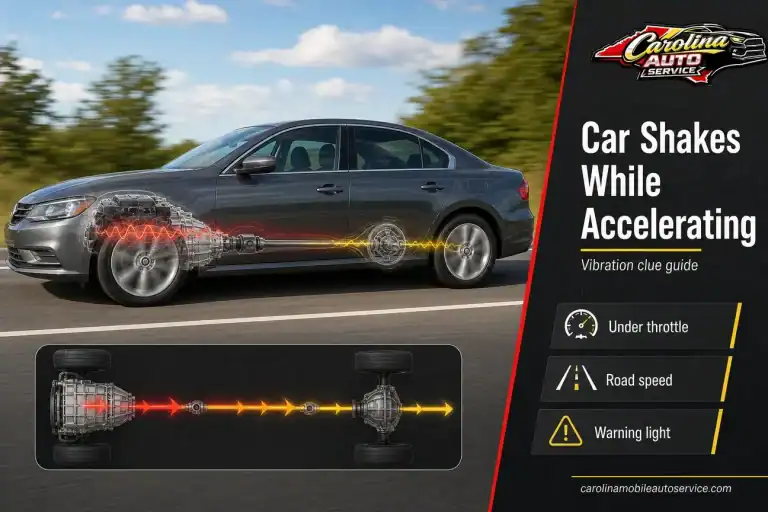
Car Shakes When Accelerating: What Could Cause It?
Quick Answer: If your car shakes when accelerating, the symptom may be associated with a drivetrain, mount, engine-performance, transmission, tire, wheel or suspension concern. The most useful clues are when the shaking starts, whether it changes when you release the accelerator, what speed or gear it happens in, and where you feel it. Stop in a safe place and arrange towing or roadside assistance if the shaking comes with steering trouble, reduced braking, overheating, smoke, fuel smell, low oil pressure, tire damage, severe power loss or a flashing warning light.
Acceleration-related shaking is different from a vibration that happens only while braking, only at highway cruising speed or only when turning. That timing matters because acceleration loads the engine, transmission, mounts and drivetrain in ways that steady cruising may not. Still, a symptom is not a diagnosis. The same shake can have more than one possible source, and only inspection and testing can confirm what the vehicle needs.
What does it mean when a car shakes when accelerating?
When a vehicle shakes under throttle, the powertrain is being asked to make and transfer torque. That extra load can make a weak mount, axle issue, misfire, tire problem or transmission-related concern more noticeable. The key is not to assume the first part that comes to mind has failed. A technician has to compare the symptom to the vehicle’s speed, engine speed, gear changes, road surface and warning-light behavior.
A vibration that appears only when the accelerator is pressed may point the inspection in a different direction than one that continues while coasting. If the shake follows engine rpm, engine performance or mount movement may be considered. If it follows road speed, tires, wheels, wheel-end components or drivetrain rotation may move higher on the inspection list.
Drivers often use the same words for different sensations. “Shake,” “shudder,” “vibration,” “buck,” “hesitate” and “wobble” can describe different problems. That is why the details you notice before the appointment can shorten the path from symptom to evidence-based repair recommendation.
What shaking under acceleration can reveal before testing
Shaking under acceleration often becomes clearer when you separate “when it happens” from “what it feels like.” A shake from a stop, a shudder during a gear change and a vibration while passing another vehicle are not identical clues. Each one can help point the inspection toward engine load, mount movement, drivetrain rotation, transmission operation or tire-and-wheel behavior.
Try to notice whether the vibration starts the moment you press the accelerator or only after the vehicle reaches a certain road speed. If it improves as soon as you lift off the gas, that can be an important load-related clue. If it continues with your foot off the accelerator, the inspection may need to look beyond acceleration-only causes.
Shaking under acceleration should also be compared with braking, turning, idling and steady cruising. A vibration that appears during braking may make brake or wheel-end diagnosis more relevant than a drivetrain-only inspection. A shake at idle that worsens when the engine is loaded may lead the technician to evaluate engine performance and mounts.
Drivers describing shaking under acceleration should avoid turning the road into a test track. If the symptom is mild and recurring, simply note the conditions when it happens naturally. If the vehicle becomes hard to control or the vibration rapidly gets worse, treat that as a safety problem.
Another helpful clue is whether shaking under acceleration changes with passenger load, cargo weight or a hill. Extra load can make an underlying concern easier to feel, but it still does not identify one failed part without inspection.
How car vibration acceleration clues point in different directions
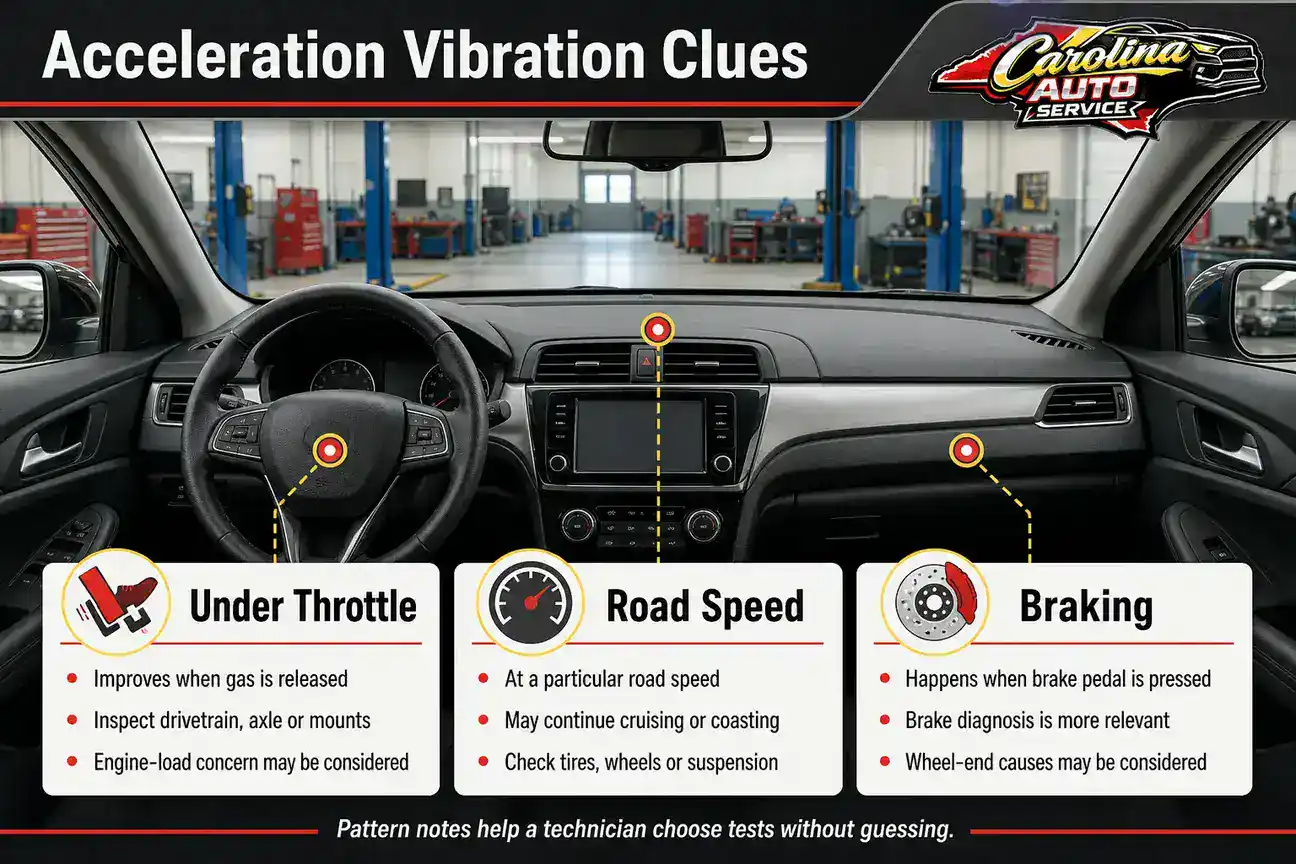
Many drivers search for a car vibration acceleration problem because the vehicle feels normal until they ask it to move, climb a hill or pass. The table below shows how the pattern can guide an inspection without naming a failed part remotely.
| What you notice | Possible direction for inspection, not a diagnosis |
|---|---|
| Shakes mainly during acceleration and improves when the accelerator is released | Drivetrain, axle, mount or engine-load concern may warrant inspection |
| Shakes at a particular road speed during acceleration, coasting or cruising | Tire, wheel, balance, suspension or wheel-end concerns may be considered |
| Shakes during braking | Brake or wheel-end diagnosis is more relevant than an acceleration-only drivetrain diagnosis |
| Shakes during a gear change or takeoff | Transmission operation, mount movement or engine performance may be evaluated |
| Shakes at idle and worsens under load | Engine-performance or mount-related causes may be considered |
| Shakes with hesitation and a warning light | Engine diagnostics and code retrieval may be appropriate |
| Shakes with a clunk when shifting from reverse to drive or during takeoff | Mounts or drivetrain movement may be evaluated |
| Shaking follows a tire impact, visible bulge or air loss | Stop when safe and have the tire and wheel assessed rather than continuing to drive |
A car vibration acceleration concern may also change when the vehicle is cold, warmed up, heavily loaded or climbing a grade. Those details matter because heat, load and speed can change how a part behaves. If the symptom appears only with the A/C on or only with several passengers in the vehicle, mention that too.
Location is another clue. A vibration felt mostly in the steering wheel can point the inspection toward the front of the vehicle, while a shake felt through the seat or floor may suggest a different area. Location alone is not proof, but it helps the technician decide what to inspect first.
A car vibration acceleration complaint should also be compared with engine rpm. If the shake rises and falls with engine speed while the vehicle speed stays about the same, that is a different clue than a shake that follows road speed.
Could drivetrain vibration be the cause?
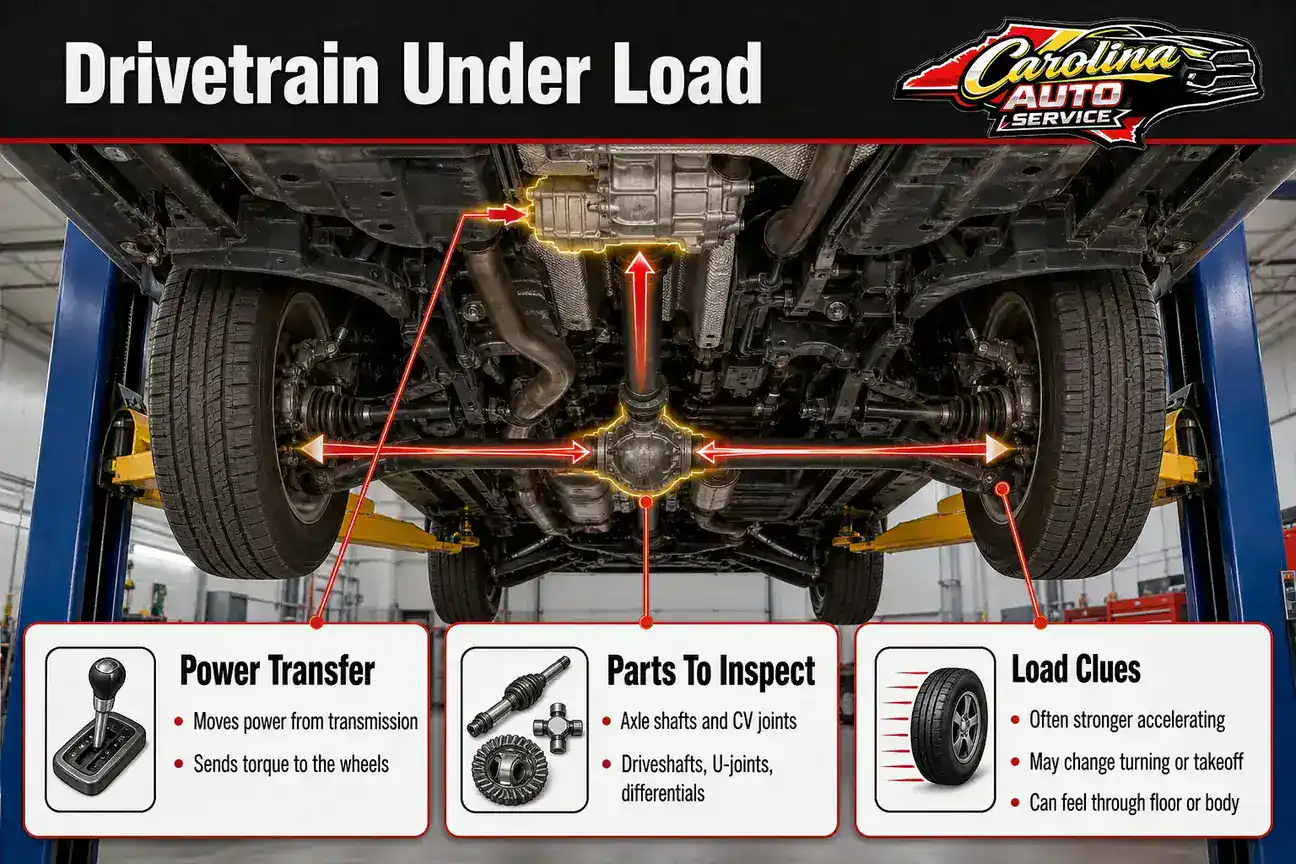
Drivetrain vibration is one of the main possibilities when a shake appears under load. The drivetrain includes parts that transfer power from the transmission to the wheels. Depending on the vehicle design, that can involve axle shafts, CV joints, driveshafts, universal joints, differentials and related components.
A drivetrain-related concern may feel stronger when accelerating than when coasting because torque is being applied through the system. It may also change during turning, takeoff or a shift in load. On some vehicles, the sensation may feel like a shudder through the floor or body rather than a steering-wheel shake.
That does not mean a specific axle, joint or shaft has failed. Drivetrain vibration is an inspection category, not a final answer. A technician may need to look for looseness, damage, abnormal movement, leaks, torn boots, worn joints or other clues before recommending a repair.
If the shake is paired with clicking, clunking, humming or a change between acceleration and deceleration, mention those details when you book service. Carolina Auto Service’s drivetrain repair page is the closest service match for clunks, vibration and axle-noise concerns that need in-shop diagnosis.
Drivetrain vibration can overlap with tires, mounts and transmission operation. For example, a vibration that follows road speed may still involve a rotating component, while a thump during takeoff may lead the technician to compare mount movement with drivetrain movement. Testing is what separates these possibilities.
Repeated drivetrain vibration during takeoff, turning or climbing a hill is worth noting carefully because load direction can change what the technician hears and feels. The more consistently you can describe the pattern, the easier it is to separate drivetrain vibration from a tire-speed vibration or engine-load shake.
Engine mounts symptoms that can feel like a shake
Engine mounts symptoms can be confusing because they do not always feel like a steady vibration. Mounts help hold the engine and, in many vehicles, the transmission in position while allowing controlled movement. If a mount is worn, damaged or loose, the powertrain may move more than it should during acceleration, shifting, starting or stopping.
Common engine mounts symptoms may include a thump, lurch, clunk or body movement when shifting from park to drive, reverse to drive or during takeoff. The driver may feel movement through the floor, seat or body rather than a rhythmic steering-wheel vibration. Those clues can point the inspection toward mount movement, but they do not prove the mounts are the cause.
Mount-related symptoms can also resemble drivetrain, transmission or engine-performance issues. A misfire can shake the engine. A drivetrain concern can thump under load. A transmission issue can shudder during takeoff or gear changes. That overlap is why an in-shop inspection matters.
When engine mounts symptoms are part of the concern, the technician may visually inspect accessible mounts, look for abnormal movement, compare the complaint with shifting and acceleration, and check for related engine or drivetrain issues. If rough running, stalling, misfire symptoms or loss of power are present, engine repair and diagnostics may also be part of the evaluation.
For drivers, the most helpful note is when the movement happens. Does it occur when starting the engine, shifting into gear, accelerating from a stop, slowing down or climbing a hill? Those details can help separate engine mounts symptoms from a tire-speed vibration or brake-related shake.
Engine mounts symptoms may be more obvious during the first few seconds of movement than during steady cruising. If the vehicle thumps once and then smooths out, mention that difference instead of simply saying it “vibrates.”
Could acceleration hesitation and engine misfire be involved?
Acceleration hesitation changes the conversation because the engine may not be producing smooth power. If the vehicle shakes and hesitates, feels down on power, runs rough or has a check-engine light, the inspection may need to include engine-performance testing. A misfire, fuel or air issue, sensor-related concern or other drivability problem may be associated with the symptom.
The check-engine light itself does not cause the shake. It indicates that the vehicle’s onboard system has detected a condition that needs evaluation. A trouble code is a clue, not a diagnosis. For example, a code may identify a cylinder, circuit, sensor reading or system condition to investigate, but testing is needed before replacing parts.
Acceleration hesitation can feel like a stumble, surge, buck or delay when you press the gas. It may happen only when the engine is cold, only under heavier throttle or only at certain speeds. If the light is flashing with severe shaking or power loss, that is a stop-driving situation, not a “keep going and see what happens” situation.
If warning lights or drivability symptoms are present, check-engine-light diagnostics can help connect scan data with real testing. If the concern involves rough running, misfire symptoms, stalling or loss of power, the shop may also evaluate the vehicle through engine repair and diagnostics.
Because acceleration hesitation can overlap with transmission shifting or drivetrain load, a road test may be needed when conditions permit and when doing so is safe. The goal is to compare engine speed, vehicle speed, load and the exact moment the shake appears.
When acceleration hesitation happens only under heavier throttle, tell the shop whether it feels like a delay, a repeated bucking motion or a loss of power. Acceleration hesitation with a flashing warning light should be treated more urgently than a mild, occasional stumble with no other symptoms.
Transmission repair clues when shaking happens during a shift
If the shake happens during takeoff, a gear change or a shudder-like moment while the vehicle is applying power, transmission operation may be one of the inspection areas. That does not automatically mean the transmission has failed. It means the technician may need to evaluate how the vehicle behaves during shifts, converter engagement, acceleration and deceleration.
Transmission-related symptoms can feel like vibration, hesitation, flare, bump, slip or shudder. Those words describe what the driver feels, not the confirmed cause. Mount movement, engine performance and drivetrain load can mimic some of the same sensations, so the inspection should not begin with assumptions.
A technician may compare the symptom in different gears, under light and heavier acceleration, and during coastdown. Scan data may be useful on vehicles with electronically controlled transmissions. Fluid condition, leaks, mounts and related components may also be considered, depending on the vehicle and the initial findings.
When the main complaint centers on shifting behavior, Carolina Auto Service’s transmission repair service is the relevant next step. If the shake is not tied to a shift, the technician may focus first on engine load, drivetrain rotation, tires or other systems.
Shudder during a shift can be mistaken for car vibration acceleration because both happen while the vehicle is gaining speed. The timing of the shudder, especially whether it happens at one shift point or during every throttle input, helps narrow the inspection path.
Could tires or wheels cause car vibration acceleration concerns?
Tires and wheels can be involved even when the driver first notices the problem during acceleration. A tire-and-wheel issue often follows road speed more than engine speed. If the vibration continues while coasting, appears at a certain speed or began after a pothole, curb impact or tire work, tires and wheels become important inspection topics.
The NHTSA tire safety page says to check the pressure of all tires, including the spare, at least once a month when the tires are cold. It also explains that the recommended tire pressure is found on the vehicle’s driver-side door label or in the owner’s manual, not on the tire sidewall.
Pressure is only one part of the picture. Tire damage, uneven wear, insufficient tread, a separated tire, a bent wheel or an imbalance can all create vibration or unsafe handling. If you see a tire bulge, rapid air loss or visible damage, stop when safe and have the tire and wheel assessed rather than continuing to drive.
A car vibration acceleration complaint is sometimes described as “it only happens when I speed up,” but the real clue may be that the vehicle reaches a certain speed during acceleration. If it shakes at that same speed while coasting, cruising or lightly maintaining speed, tell the shop. That can change the direction of the inspection.
If a tire impact happened recently, do not ignore new shaking under acceleration just because the vehicle still drives. A bent wheel, tire damage or suspension concern can show up as vibration, pulling or instability, and a physical inspection is needed to sort out those possibilities.
What other systems might be involved?
Acceleration shaking can involve systems beyond the most obvious engine and drivetrain categories. Suspension and steering components can contribute to vibration, looseness, pulling or instability. Wheel-end concerns can also create vibration or noise. If the vehicle pulls hard, wanders or feels difficult to control, treat it as a safety concern.
Brake-related vibration is a separate clue. If the shaking happens mainly when pressing the brake pedal, the inspection should shift toward braking and wheel-end causes instead of an acceleration-only diagnosis. If it happens while accelerating and braking, the technician needs to compare both conditions.
Cooling, oil-pressure and electrical warnings change the priority. Shaking with overheating, steam, a temperature warning, low oil-pressure warning, smoke or a fuel smell should not be driven further. Those symptoms can indicate conditions that may worsen quickly or create safety risks.
Hybrid vehicles add another layer of caution. The NHTSA electric and hybrid vehicle safety page discusses safety considerations for electric and hybrid vehicles. If a hybrid high-voltage warning or serious electrical warning appears, do not attempt high-voltage inspection or repair; stop safely and arrange professional help.
For broader vibration, pulling, steering, suspension or mixed-symptom concerns, Carolina Auto Service’s auto repair services page is the general service hub. The important point is the same: the symptom guides the inspection, but testing confirms the cause.
What will an in-shop inspection involve?
An in-shop inspection usually starts with the story of the symptom. When did it begin? Was there a pothole impact, curb strike, recent tire work or repair? Does it happen from a stop, during passing, uphill, during a shift or only at a certain speed? The answers help decide what to check first.
The inspection may include a visual check of tires, wheels, accessible drivetrain parts, mounts, leaks and related areas. If a warning light or drivability complaint is present, scan testing may be used to retrieve codes and data. Those results still have to be interpreted with testing because a code is a clue, not a confirmed failed part.
When conditions permit and it is safe to do so, the technician may road-test the vehicle to reproduce the symptom. The goal is to compare acceleration, coasting, deceleration, gear changes and turning. A road test can help separate engine-speed vibration from road-speed vibration and load-related shaking from steady-speed shaking.
Carolina Auto Service diagnoses and repairs vehicles at its shop at 160 Hanes Mall Circle in Winston-Salem, near Hanes Mall. ASE-certified technicians inspect the vehicle, explain findings and provide clear repair recommendations and an estimate before authorized repairs begin. A nationwide limited 24-month/24,000-mile parts and labor warranty on qualifying repairs may apply; ask about terms.
The FTC auto repair basics guidance encourages consumers to ask questions and understand repair recommendations. That fits a diagnosis-first approach: you should know what was found, why the repair is recommended and what approval is needed before work begins.
During the visit, describe whether the main concern feels like drivetrain vibration, acceleration hesitation, engine mounts symptoms, tire-speed vibration or a mixed pattern. Those are not diagnoses, but they give the inspection a useful starting point.
When should you stop driving?
No article or phone description can establish that a vehicle is safe to drive. If the vibration is mild and consistent, you may be deciding whether to schedule an inspection. If the symptom is severe, rapidly worsening or paired with safety warnings, the decision changes.
Stop in a safe location and arrange towing or roadside assistance rather than driving on if shaking is accompanied by any of these symptoms:
- Reduced, unpredictable or abnormal braking
- Steering loss, severe pulling or difficulty controlling the vehicle
- Overheating, steam or a temperature warning
- Low oil-pressure warning
- Fuel smell, visible fuel leakage or smoke
- A flashing check-engine light, especially with severe shaking or power loss
- Damaged tire, visible bulge, rapid air loss or suspected tire failure
- Loud banging, grinding or a vibration that gets worse quickly
- Hybrid high-voltage warning or another serious electrical warning
Do not open a hot radiator cap, work under a vehicle supported only by a jack, handle hybrid high-voltage components or handle A/C refrigerant. If a roadside-assistance benefit may apply after qualifying service, read the terms of the roadside assistance program; it is a third-party program, not a shop-operated towing or roadside repair service.
What should you record before booking service?
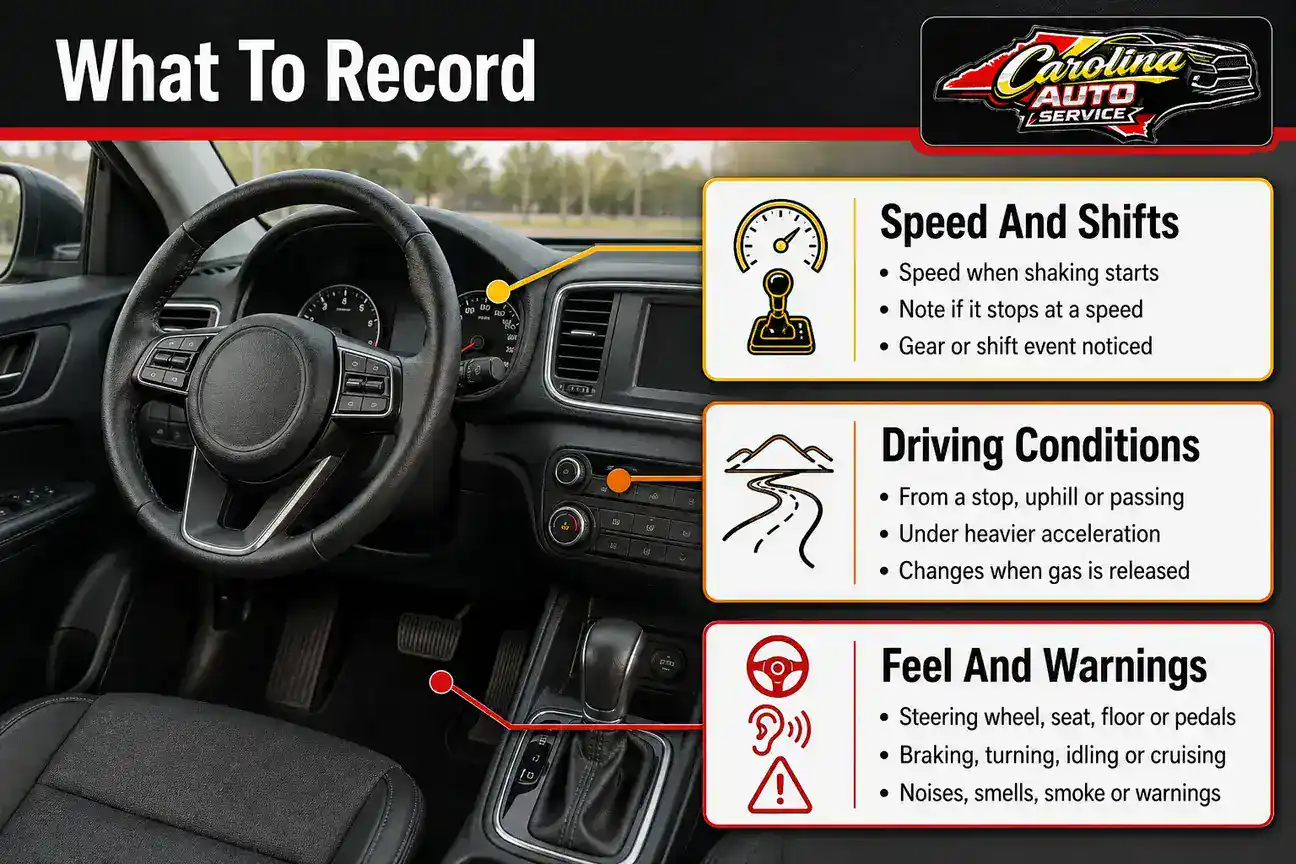
The more specific your notes are, the easier it is to reproduce and isolate the concern. You do not need to diagnose the vehicle. Just describe what happened in plain language.
- The speed when the shaking starts and whether it stops at a certain speed
- The gear or shift event, if you notice one
- Whether the symptom happens from a stop, uphill, during passing or under heavier acceleration
- Whether the shaking changes when you release the accelerator
- Whether it happens while braking, turning, idling or cruising
- Where you feel it: steering wheel, seat, floor, pedals or whole vehicle
- Any noises such as clunks, clicks, bangs, hums, grinding or rattles
- Any smells, smoke, overheating or fluid leaks
- Whether a warning light is steady or flashing
- Whether the engine hesitates, loses power, stalls or runs roughly
- Recent pothole, curb impact, tire work, repair work or unusual event
- Whether the vehicle was cold, warmed up, heavily loaded or using the A/C
If the symptom is recurring, worsening or paired with acceleration hesitation, warning lights or unusual noise, schedule an inspection rather than guessing. You can request an appointment and include the details above, or call 336-765-8599. The shop confirms the appointment time.
Car shakes when accelerating: when should you schedule an inspection?
For Winston-Salem and Forsyth County drivers, a recurring shake under throttle is worth checking before it becomes harder to reproduce or more severe. Local driving can include stop-and-go traffic near Hanes Mall and I-40, potholes, heat, humidity and quick changes between neighborhood speeds and highway speeds. Those conditions can make a weak or developing problem more noticeable, but they do not identify the cause by themselves.
Schedule an inspection when the vibration repeats under similar conditions, comes with drivetrain vibration, includes acceleration hesitation, follows a tire impact or appears with a warning light. If the symptom only happened once and has not returned, keep notes and watch for a pattern. If it returns, your notes can help the technician compare engine speed, road speed, load and vehicle behavior.
If you drive in from Clemmons, Lewisville or other nearby parts of Forsyth County, Carolina Auto Service performs diagnosis and repair at the Winston-Salem shop. Appointment requests can be made online, and vehicle drop-off outside business hours may be available. The shop is open Monday-Friday 7:30 a.m.-5:30 p.m., and the appointment time is confirmed by the shop.
If your car shakes when accelerating, the safest next step is to treat the symptom as a clue and let inspection separate the possible causes. General educational information, not a diagnosis. Only an in-person inspection can confirm what a vehicle needs.
Frequently Asked Questions
Is it safe to drive if my car shakes when accelerating?
Not necessarily. Only an in-person inspection can establish what the vehicle needs; stop safely and arrange towing or roadside assistance if the shaking involves braking, steering, overheating, smoke, fuel smell, low oil pressure, tire damage, severe power loss or a flashing warning light.
Why does my car shake only when I press the accelerator?
Acceleration places additional load on the engine, transmission, mounts and drivetrain, so a concern in one of those areas may become more noticeable under load. Tires, wheels and other systems can also contribute, and testing is required to distinguish among them.
What if the car shakes during acceleration but not at highway speed?
That pattern may make load-related engine, mount, transmission or drivetrain concerns worth considering, but it does not rule out tires, wheels or suspension. The technician should compare acceleration, coasting and steady-speed behavior.
What if the steering wheel shakes instead of the whole car?
A steering-wheel sensation can be associated with the front tires, wheels, steering or suspension, but location alone does not identify a failed component. A vehicle inspection is needed, especially if the vehicle pulls or control feels abnormal.
Can a check-engine light cause acceleration shaking?
The light itself does not cause the shaking; it may signal an engine or emissions-related condition associated with rough running, hesitation or loss of power. A code is a clue, not a diagnosis, so scan results must be interpreted with testing.
Can bad engine mounts cause shaking when accelerating?
Mount concerns may allow greater powertrain movement during acceleration or shifting and can be associated with shaking, thumps or lurching. Inspection is needed to determine whether mounts, drivetrain parts or another system is involved.
What should I tell the repair shop?
Report when the symptom began, the speed and conditions when it occurs, whether it changes when coasting, where it is felt, any noises or smells, warning-light behavior, recent impacts or repairs, and whether the engine hesitates or loses power.