
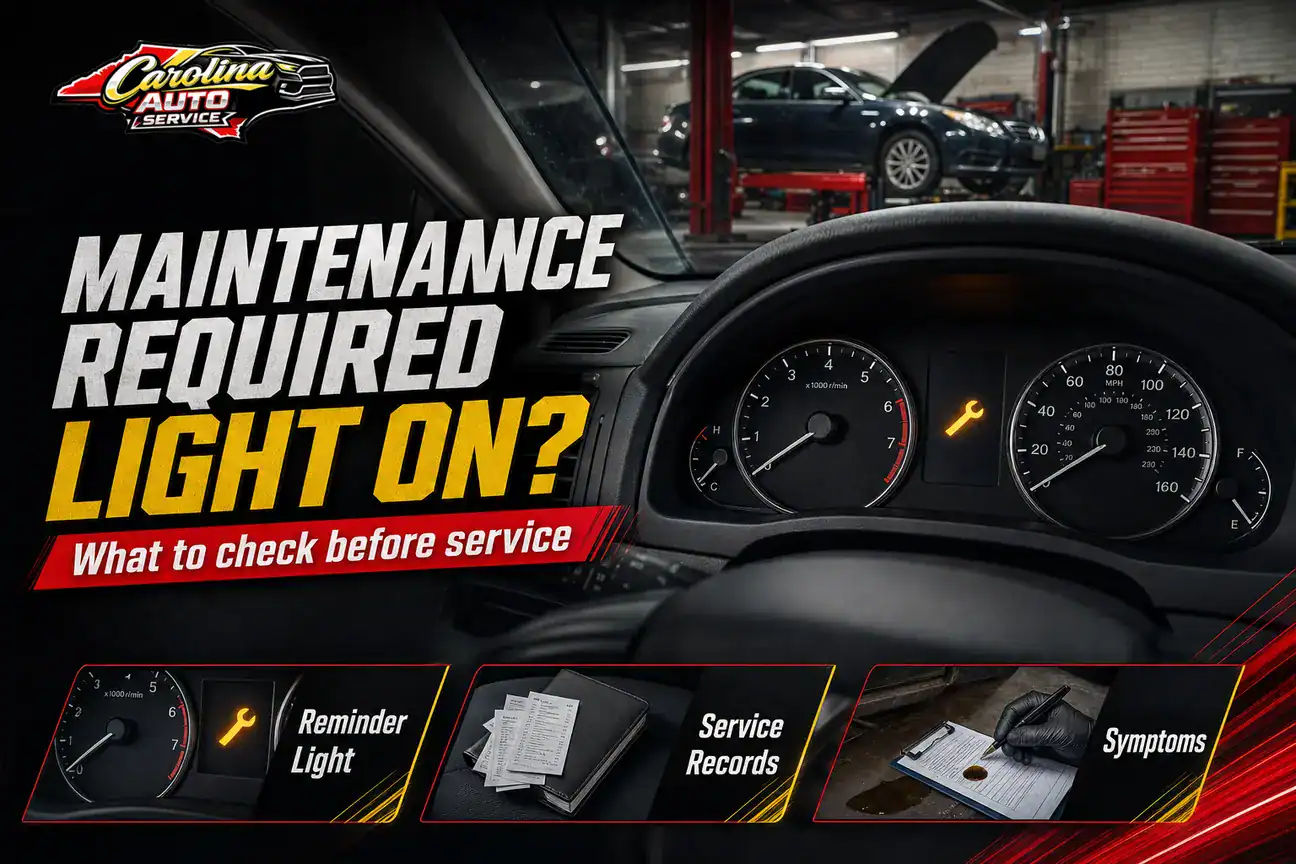
What Does the Maintenance Required Light Mean? Safe Answers
If the maintenance required light appears on your dashboard, it usually means your vehicle is reminding you to review scheduled service, not telling you that one specific part has failed. For Winston-Salem drivers, the right next step is to check the owner’s manual, look at recent maintenance records, and schedule service if the reminder matches due or overdue maintenance. The light should not be ignored, but it also should not be treated like a diagnosis by itself.
Quick Answer: A maintenance reminder generally points to scheduled service based on the vehicle’s maintenance system, mileage, time, or manufacturer schedule. It is different from a check-engine warning, which can involve diagnostic testing. If the reminder appears with serious symptoms or another warning light, the situation may be more urgent.
Quick Answer: Is a Service Reminder Light Serious?
A service reminder light is usually serious in the sense that your vehicle is asking you to review maintenance, but it is not the same as a warning that identifies a failed component. It is a prompt to look at the vehicle-specific schedule, not a universal instruction to perform one exact service on every car.
That distinction matters. A commuter car, hybrid vehicle, light truck, and business fleet vehicle may have different maintenance needs even when the dashboard wording looks similar. The same reminder may also mean something different from one model year to another. That is why the owner’s manual, maintenance schedule, mileage, time since last service, and records all matter.
For Toyota vehicles, Toyota 2021 RAV4 owner information describes the maintenance reminder and directs owners to the applicable owner’s manual or scheduled-maintenance guide for the interval that applies to that vehicle. That Toyota example is useful, but it should not be stretched into a rule for every manufacturer.
The calm approach is simple: do not panic, do not assume a single service, and do not reset the reminder just to clear the dash. Review the schedule and arrange service if records show something is due or if the history is unclear.
What the Maintenance Required Light Tells You
The maintenance required light generally tells you the vehicle’s maintenance reminder system has reached a point where service should be reviewed. It may be tied to distance driven, time, oil-life calculations, operating conditions, or another manufacturer-specific maintenance monitor. The exact logic depends on the make, model, year, engine or hybrid system, instrument cluster, and service history.
What it does not tell you by itself is that a specific part has failed. A dashboard reminder is a clue, not a diagnosis. It may line up with an oil and filter service, a filter inspection, fluid checks, tire-related maintenance noted in the owner’s manual, belt-related maintenance, hybrid-specific maintenance checks, or another scheduled item. The dashboard message alone does not confirm which of those applies.
A service reminder light can also be easy to misread because different vehicles use different wording. Some say “maintenance required,” some say “service due,” and some display a symbol, wrench icon, percentage, or message in a driver-information screen. The exact wording and color should be noted before you schedule service.
For maintenance planning, the vehicle’s owner’s manual and manufacturer maintenance schedule should carry more weight than a generic internet interval. The schedule may separate normal service from more demanding operation, and it may include both time and mileage. If the vehicle has incomplete records, an inspection helps determine what is actually due rather than guessing from the dashboard alone.
Why Scheduled Car Maintenance Should Not Be Based on One Universal Interval
Scheduled car maintenance varies because vehicles are not all maintained the same way. Engine design, oil specification, hybrid components, driving conditions, age, previous service quality, and manufacturer requirements all affect what should be checked. A short-trip vehicle may age fluids and filters differently than a highway commuter. A business vehicle may collect mileage and idle time differently than a personal vehicle.
That is why Carolina Auto Service avoids diagnosis by assumption. A dashboard reminder can start the conversation, but the service decision should come from the vehicle-specific schedule and available records. If the last service sticker, digital records, or receipts are missing, the shop may need to inspect the vehicle and review what maintenance items can be verified.
The vehicle-specific schedule matters more than a one-size-fits-all number. The owner’s manual may include reminders, inspections, time-based service items, mileage-based items, and notes about driving conditions. If the exact schedule is not available, the shop can still review records and inspect the vehicle before making a recommendation.
Scheduled car maintenance can include more than engine oil. Depending on the vehicle and schedule, it may involve inspections, fluid checks, filters, spark plugs, belts, coolant service, brake inspections, hybrid-related checks, or other items. Some of those are confirmed only by inspection, service records, and manufacturer information.
How the Service Reminder Light Differs From the Check-Engine Light
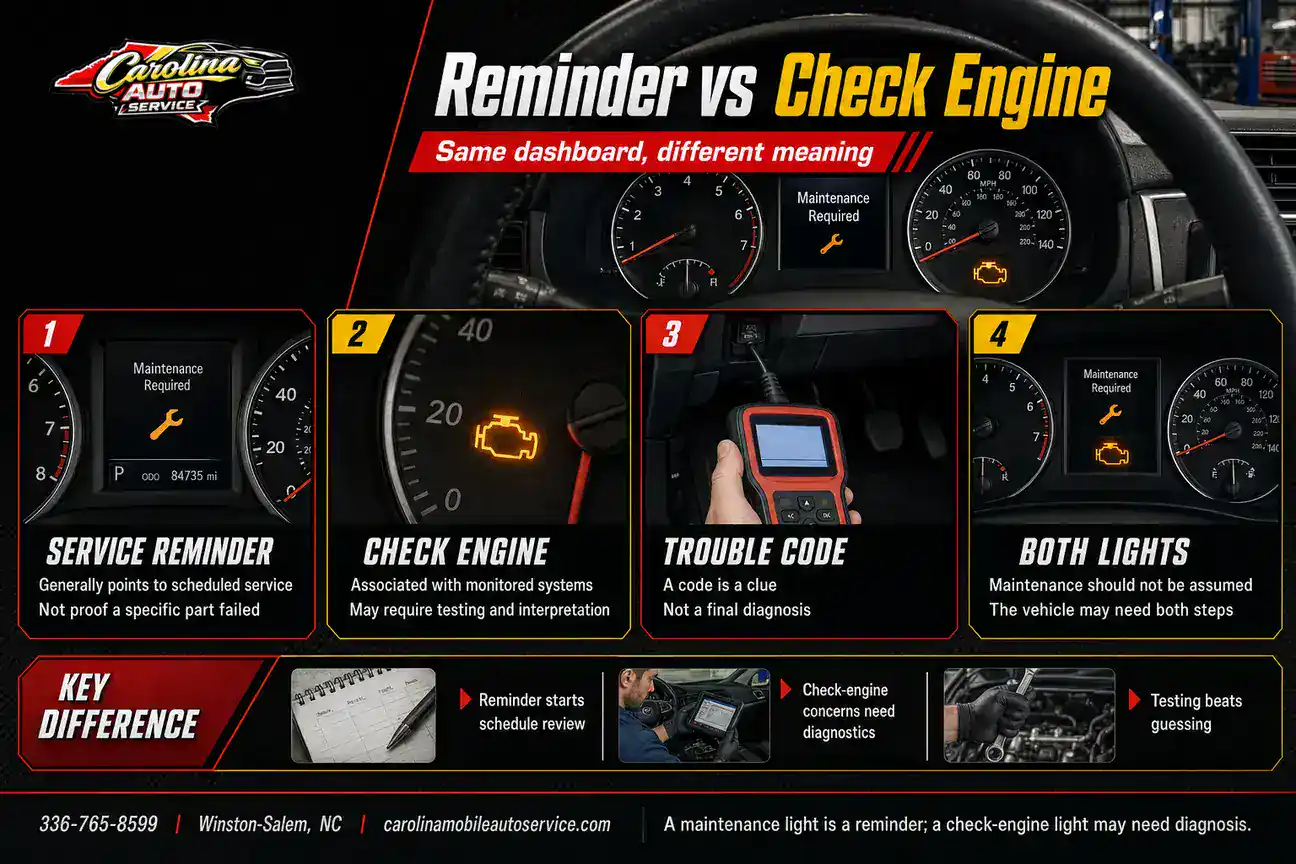
A service reminder light and a check-engine light can both appear on the dashboard, but they do not mean the same thing. The maintenance reminder generally points to scheduled service. A check-engine warning is associated with monitored systems and may require trouble-code retrieval, testing, and interpretation. A trouble code is also a clue, not a final diagnosis.
If both lights appear at the same time, routine maintenance should not be assumed to explain the check-engine condition. The vehicle may need both schedule review and diagnostic testing. Carolina Auto Service provides check-engine-light diagnostics for warning lights that need testing rather than guessing.
| Light or condition | What it generally communicates | What it does not prove |
|---|---|---|
| Maintenance reminder | A scheduled-service reminder or maintenance-system notification | A specific failed part |
| Check-engine light | A monitored fault that may require diagnostic testing | The exact failed component without testing |
| Both lights together | A maintenance reminder plus another condition that may need diagnosis | That routine maintenance alone will resolve the warning |
| Flashing check-engine light or severe symptoms | A potentially urgent condition | That continued driving is appropriate |
The difference is especially important when the vehicle has drivability symptoms. Rough running, smoke, overheating, fuel odor, reduced braking, steering issues, or severe shifting problems change the conversation from routine maintenance to safety-first evaluation.
What Information Should You Gather Before Scheduling Service?
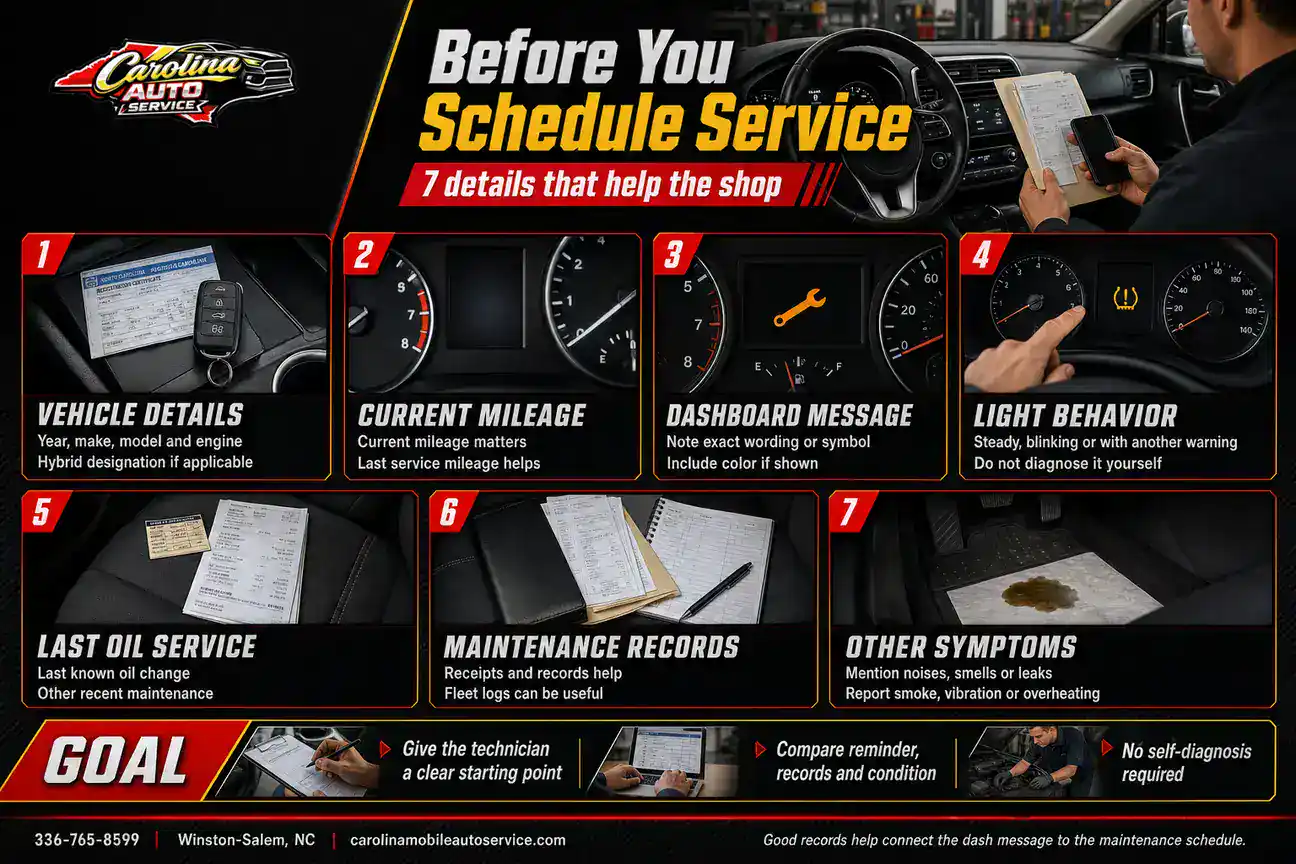
Before scheduling scheduled car maintenance, write down details that help the shop understand what the vehicle is asking for. You do not need to diagnose the problem yourself. The goal is to provide a clear starting point so the technician can compare the reminder, records, and vehicle condition.
- Year, make, model, engine, and hybrid designation if applicable
- Current mileage and, if known, date and mileage of the last service
- Exact dashboard wording, symbol, color, or message
- Whether the light is steady, blinking, or shown with another warning
- Last known oil change and any other recent maintenance
- Receipts, service stickers, digital records, or fleet logs
- Any noises, smells, leaks, smoke, vibration, overheating, braking changes, shifting concerns, or A/C issues
- When symptoms occur: cold start, hot idle, acceleration, braking, turning, highway speed, stop-and-go traffic, or with the A/C on
That information helps separate a routine reminder from a symptom that deserves more testing. For example, a service reminder light with no other known concern may lead to schedule review and maintenance. The same reminder with a flashing warning or overheating should be treated differently.
For business vehicles, records matter even more. Fleet maintenance depends on consistent documentation, vehicle use, and repair history. A dashboard reminder may be one part of the decision, but fleet logs and manufacturer schedules help determine what is actually due.
Should You Schedule Service When the Reminder Appears?
Yes, the reminder is a reasonable prompt to review your maintenance schedule and arrange service. That does not mean every vehicle automatically needs the same service. It means the reminder should be checked against the owner’s manual, records, mileage, time, and current condition.
For many vehicles, an oil change service may be part of routine maintenance, but the reminder alone does not prove that oil is the only item due. Filters, fluid checks, inspections, and other schedule-based items may also be listed for the vehicle. Carolina Auto Service can review the available maintenance history, inspect the vehicle, explain findings, and provide an estimate before authorized repairs begin.
If you are not sure which service is due, avoid choosing repairs solely from the dashboard message. The better path is to ask for schedule review and inspection. That keeps scheduled car maintenance tied to the vehicle instead of to guesswork.
Drivers can also review broader auto repair services when the reminder appears with a symptom that does not fit routine service. A warning light, leak, noise, vibration, overheating concern, or shifting symptom may need inspection or diagnostic work beyond a maintenance visit.
To request service, use the schedule an appointment page or call 336-765-8599. Include the year, make, model, mileage, exact reminder message, last known service, and any symptoms. The shop confirms the appointment time.
When Should You Stop Driving Instead of Treating It as Routine Maintenance?
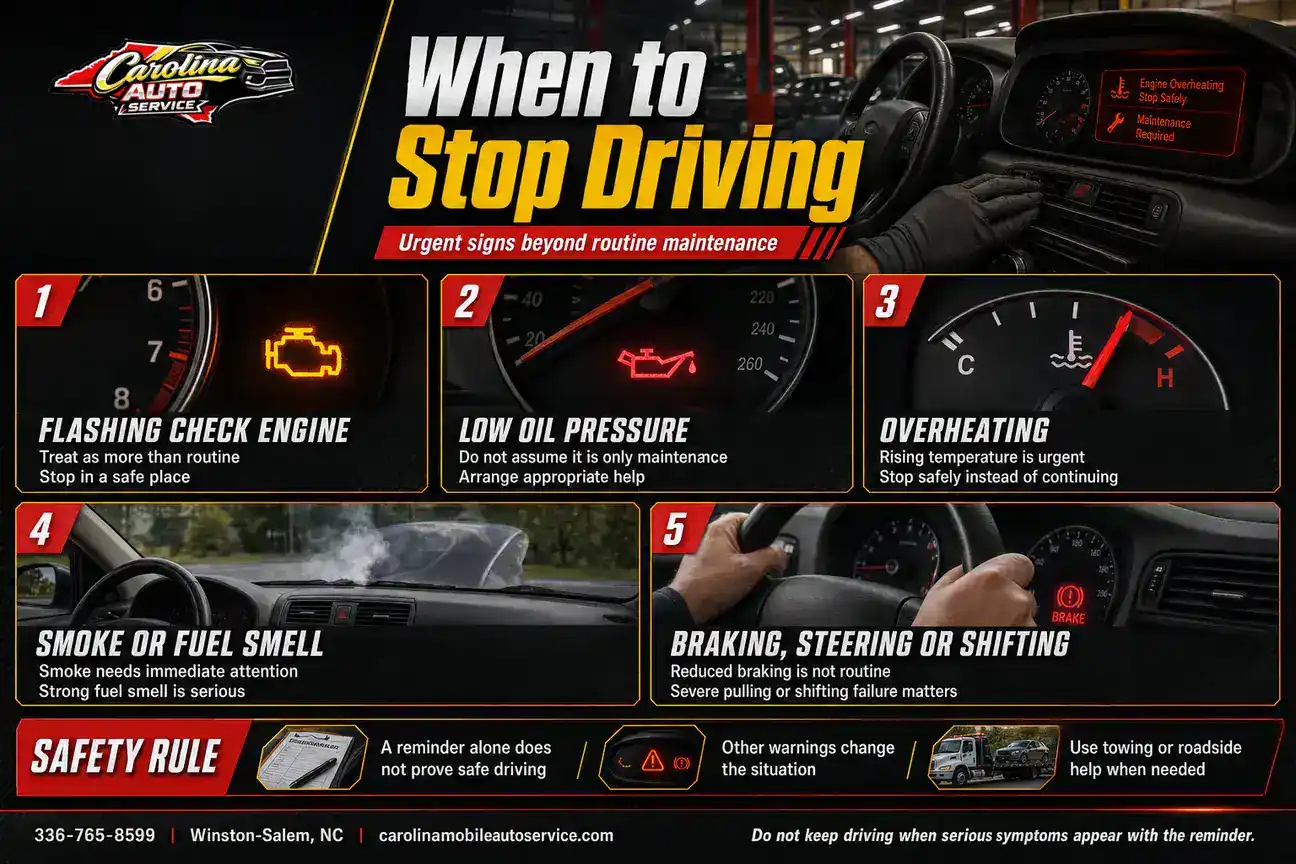
A maintenance reminder by itself does not establish that the vehicle is safe to drive. Safety depends on the vehicle’s actual condition and any other warnings or symptoms. Never keep driving just because you hope the message is “only maintenance.”
Stop in a safe place and arrange towing or appropriate roadside assistance rather than continuing to the shop if the reminder is accompanied by any of the following:
- A flashing check-engine light
- Low oil-pressure warning
- Overheating or a rising temperature gauge
- Smoke or a strong fuel smell
- Significantly reduced braking
- Loss of steering control or severe pulling
- Severe shifting failure
- A hybrid high-voltage or electrical safety warning
- Any condition that makes vehicle control uncertain
Do not open a hot radiator cap, bypass warning systems, work under a vehicle supported only by a jack, or attempt hybrid high-voltage work. For hybrid safety concerns, the National Highway Traffic Safety Administration provides electric and hybrid vehicle safety information, and owners should treat high-voltage warnings cautiously rather than attempting roadside diagnosis.
This is also where wording matters. A reminder can be routine, but a serious symptom changes the urgency. Inspection and testing are what confirm the next step.
Can You Reset Maintenance Light Messages Yourself?
A reset maintenance light question comes up often because drivers want a clean dashboard after service. The safest general rule is to reset a reminder only according to the manufacturer’s instructions and only after the applicable maintenance has been completed and documented.
Do not use a random button sequence from the internet unless it matches your exact vehicle information. Reset procedures vary by make, model, year, display type, and maintenance system. Some owner information provides a vehicle-specific procedure for resetting the reminder light or message, which shows why there is no single universal sequence that should be applied to every vehicle.
A reset maintenance light action does not prove that maintenance was performed. It simply clears or updates the reminder data. If the required service was skipped, the vehicle may still be overdue even though the dashboard looks normal.
Manufacturer instructions generally place the reset after required maintenance is performed according to the maintenance schedule. That order matters: service first, reset second. Ongoing maintenance may also include fluid checks, visual inspections, and other items that are not fully explained by the dashboard reminder alone.
If the reminder returns soon after a reset, the service interval may have been entered incorrectly, the maintenance data may not have been reset properly, required service may not have been completed, or another vehicle-specific condition may need review. Carolina Auto Service can review service history and determine what should be inspected before the reminder is reset.
What Does a Shop Check When the Reminder Is On?
When a vehicle comes in with a maintenance reminder, the first step is not to assume a part failure. The shop should confirm the dashboard message, vehicle information, mileage, and maintenance history. From there, the manufacturer schedule helps identify what may be due.
Depending on the vehicle and records, the inspection may include reviewing fluid condition and levels, checking visible maintenance items, looking for leaks, confirming filter or belt-related items when applicable, and inspecting areas connected to reported symptoms. If another warning light or drivability issue is present, testing may be needed instead of simple maintenance.
For hybrids, scheduled items and safety considerations may differ from a conventional vehicle. Carolina Auto Service provides hybrid service, but drivers should not attempt hybrid high-voltage diagnosis or repair themselves. A hybrid warning should be treated according to the owner’s manual and inspected by qualified in-shop service personnel.
A service reminder light should also be considered alongside recalls and owner information. Recalls are separate from normal maintenance, but drivers can search by VIN through the NHTSA recalls page if they want to check whether a safety recall applies to their vehicle.
Carolina Auto Service’s process centers on inspection, explanation of findings, and an estimate before authorized repairs begin. That helps keep scheduled car maintenance practical: the goal is to service what is due and diagnose what is uncertain, not to replace parts based only on a dashboard reminder.
What to Expect From a Maintenance Visit
A maintenance visit often starts with a conversation. Be ready to explain when the light appeared, whether it changed, whether any other lights are on, and what service was done recently. If you have records, bring them. Receipts, fleet logs, oil-change stickers, and digital service history can all help prevent unnecessary repeat work.
The Federal Trade Commission’s Auto Repair Basics guidance encourages consumers to understand repair recommendations, ask questions, and keep written records. That fits well with dashboard reminders because records help connect the message on the dash to the maintenance schedule.
The shop may recommend an oil change service if the schedule and records support it, but it may also recommend other inspection or maintenance items depending on the vehicle. If another warning light or symptom is present, the visit may shift toward diagnostics. That does not mean the reminder was wrong; it means the reminder was only one clue.
Ask what is due now, what can be monitored, and what the manufacturer schedule lists for the next service. If qualifying repairs are performed, ask about terms for the nationwide limited 24-month/24,000-mile parts and labor warranty on qualifying repairs.
How Reset Decisions Fit Into Scheduled Car Maintenance
A reset decision should be tied to the actual service event. If a vehicle receives the proper service and the records are updated, then a reset maintenance light procedure may be appropriate according to the manufacturer’s instructions. If the records are incomplete, the shop may need to inspect the vehicle and compare the schedule before clearing the reminder.
For example, if a driver recently had service done elsewhere but the reminder stayed on, the maintenance may have been completed but the reminder data may not have been reset. Or the reminder may represent a different scheduled item. Without the records and vehicle-specific schedule, there is no reliable way to know from the light alone.
For high-mileage vehicles, scheduled car maintenance is also about catching overdue items before they become larger problems. That does not mean replacing parts because of age alone. It means using the schedule, inspection, and vehicle history to make a clear recommendation.
What This Means for Winston-Salem Drivers
Carolina Auto Service provides in-shop maintenance, diagnostics, and repair at 160 Hanes Mall Circle in Winston-Salem, NC 27103. Drivers from Forsyth County can use the maintenance reminder as a prompt to gather records, check the manual, and schedule a service review when the vehicle is not showing urgent warning signs.
The local driving routine can matter. Stop-and-go traffic near Hanes Mall and I-40, summer heat and humidity, pollen, cold snaps, and potholes can all make maintenance history more important. Those conditions do not create one universal interval, but they are useful details to mention when describing how the vehicle is used.
If the vehicle belongs to a business, maintenance records are especially useful. Fleet vehicles often see repeated routes, idle time, and shared drivers, so a dashboard reminder should be matched with logs and the manufacturer schedule rather than treated in isolation.
Carolina Auto Service is an in-shop repair facility with ASE-certified technicians. Appointment requests can be made online, and vehicle drop-off outside business hours may be available; ask the shop about details. Service work is performed at the Winston-Salem shop, and the appointment time is confirmed by the shop.
Practical Next Steps Before You Book
Before you book, take five minutes to collect the information that will make the visit more useful. Check the owner’s manual or manufacturer schedule if you have it. Look for the last service record. Note the exact light or message and whether anything else is happening with the vehicle.
If the reminder is the only known issue, request a maintenance review and mention the mileage and last known service. If a check-engine light, warning message, leak, overheating, smoke, fuel smell, braking change, steering problem, severe shifting issue, or hybrid safety warning is present, explain that clearly and treat the situation as more than routine maintenance.
You can request an appointment or contact Carolina Auto Service with the vehicle year, make, model, mileage, dashboard wording, maintenance history, and symptoms. The shop is open Monday-Friday 7:30 a.m.-5:30 p.m., and the shop confirms the appointment time.
Bottom Line on the Maintenance Required Light
The maintenance required light is best understood as a scheduled-service reminder, not a diagnosis. It should lead you to the owner’s manual, maintenance records, and an in-person inspection when records are missing or symptoms are present.
Do not assume it always means an oil change, do not reset it before confirming the right service has been performed, and do not treat the vehicle as safe to drive when serious symptoms or other warning lights are present. A reminder is helpful, but inspection and testing confirm what the vehicle needs.
General educational information, not a diagnosis. Only an in-person inspection can confirm what a vehicle needs.
Frequently Asked Questions
Is the maintenance required light the same as the check-engine light?
No. The maintenance required light generally reminds the driver about scheduled service, while the check-engine light may indicate a monitored fault that requires diagnostic testing. Either light must be interpreted using the vehicle’s manual and current symptoms.
Does the maintenance required light always mean an oil change?
No. Oil service may be included in the vehicle’s scheduled maintenance, but the light alone does not identify every service due. Check the owner’s manual and maintenance history, then have the vehicle inspected if the records are incomplete.
Can I keep driving with the maintenance required light on?
The light alone does not establish that a vehicle is safe to drive. Do not continue driving if it appears with overheating, low oil pressure, smoke, fuel smell, reduced braking, steering loss, severe shifting trouble, a flashing check-engine light, or another serious warning. Stop safely and arrange towing or appropriate roadside assistance.
How soon should I schedule service after the light appears?
Schedule a review of the maintenance schedule and service history when the reminder appears. The appropriate timing depends on the vehicle-specific schedule, mileage, time, operating conditions, and whether the vehicle has other symptoms or warnings.
Can I reset the maintenance required light myself?
Only if the manufacturer’s instructions allow it and the required maintenance has been completed. Reset steps vary by make, model, and year. A reset does not confirm that the vehicle received the correct service.
What should I bring or tell the shop?
Provide the vehicle’s year, make, model, mileage, exact dashboard message, recent service records, last known oil change, and any symptoms. Explain when a symptom occurs, such as during cold starts, idling, acceleration, braking, turning, highway driving, or A/C use.
What will Carolina Auto Service do if the light is on?
Carolina Auto Service can review the vehicle’s maintenance information, inspect the vehicle, perform appropriate testing when needed, explain the findings, and provide an estimate before authorized repairs begin. The shop provides in-shop service at its Winston-Salem facility.